A basement flood behaves differently than an upstairs leak — it sits below grade, it often involves a sump system, and finished basements have their own material challenges.
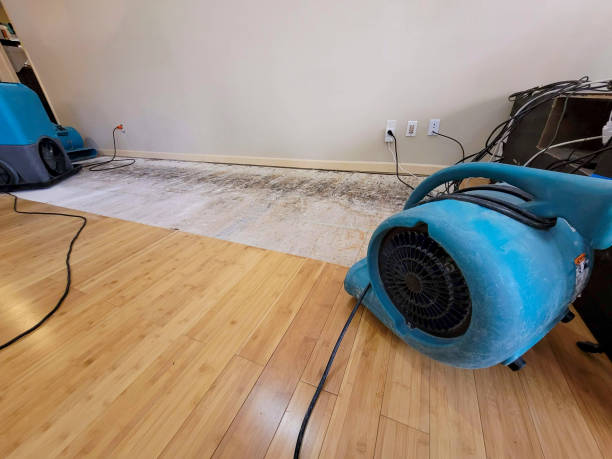
Below-grade dehumidification runs longer and stronger than a standard job because basements naturally hold more ambient moisture.

Basement extraction gear is chosen for the specific layout challenges of a below-grade Bowling Green, OH space.
We won't just clean up water without identifying why it got in in the first place.
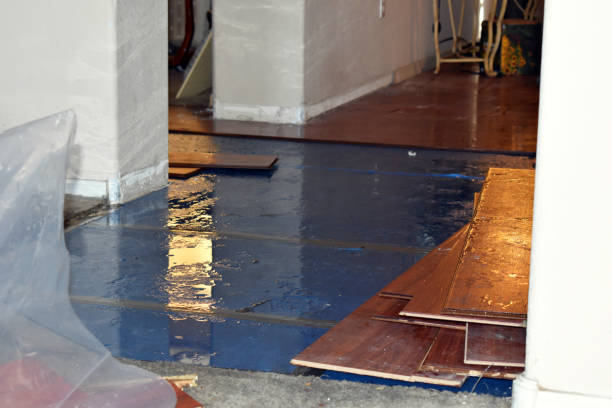
Drop ceiling tiles, laminate flooring, and framed drywall in a finished Bowling Green, OH basement each require different salvage decisions.
Basements hold humidity longer than upper floors, so our Bowling Green, OH crews apply antimicrobial treatment more aggressively in below-grade spaces.
Below is the full scope our Bowling Green, OH crews run on a typical basement flood cleanup.

Sump failure diagnostics are step one on most Bowling Green, OH basement calls.
We trace water staining back to the foundation wall to confirm whether a crack is the source.
Careful material assessment can save framed walls and flooring that a rushed approach would tear out unnecessarily.
{We check window wells and French drain function as part of the source diagnosis|Clogged or failed window well drainage is a common Bowling Green, OH basement flood cause we test for|French drain performance gets evaluated alongside the sump system during our assessment}.
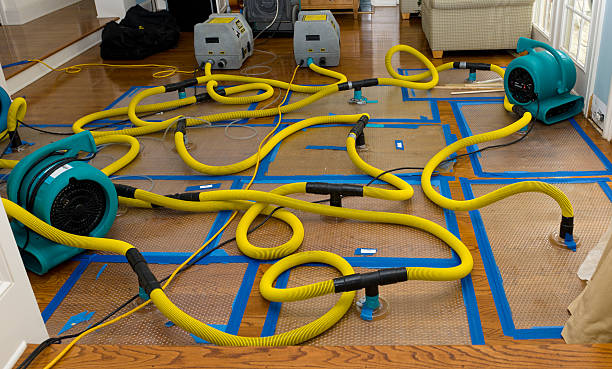
We size dehumidification equipment for the added moisture load typical of below-grade spaces.
Antimicrobial treatment is applied to framing and subfloor with extra attention given the higher mold risk below grade.
Even a rough description helps us bring the right diagnostic tools.
Confined-space extraction gear is brought along for typical basement layouts.
We diagnose the water source — sump, foundation, or window well — before quoting the cleanup scope.
Extended drying continues until the basement hits the same dry-standard threshold as any other space.

"Our sump pump failed during a storm and they not only cleaned up the water but explained exactly why the pump failed." — Carla D.
"They saved most of our finished basement drywall by only cutting where the moisture readings showed a problem." — Reggie F.
"Found a foundation crack we didn't even know we had. Glad they checked instead of just drying and leaving." — Nadia S.
Sump pump failure, foundation cracks, and window well breaches are the three most common causes we see.
We'll identify sump issues and can refer or coordinate repair alongside the cleanup.
Careful assessment often saves more of a finished basement than expected.
Extended drying cycles are standard for basements, not a sign of a bigger problem.
We trace water staining patterns back to the wall during assessment to confirm a foundation source.
Bowling Green sits within our core basement response zone.

One call gets a below-grade specialist routed to Bowling Green.
Call +1-844-833-1325